


Dental Bridges Katy, TX: Restore Your Smile by Replacing Missing Teet
A missing tooth affects more than your appearance—it impacts your ability to chew, speak clearly, and smile with confidence. At Maison Dentists in Katy, TX, we offer custom dental bridges that replace missing teeth naturally, restoring function and aesthetics to your smile.
A dental bridge is a prosthetic tooth (or teeth) that literally “bridges” the gap created by one or more missing teeth. The bridge is anchored to adjacent teeth or implants, creating a permanent restoration that looks, feels, and functions like natural teeth.
If you’re missing one or more teeth, you have options: dental implants, bridges, or dentures. Each has advantages. Dental bridges offer an excellent solution that’s more affordable than implants while looking and functioning better than dentures. Most bridges can last 10-15+ years with proper care, making them a long-term investment in your smile.
This comprehensive guide explains what dental bridges are, when they’re the best solution, how the procedure works, how to care for them, and why Maison Dentists creates some of the most beautiful dental bridges in Katy, TX. Let’s explore how a bridge can restore your confident smile.
What Is a Dental Bridge? How Missing Teeth Affect Your Smile in Katy
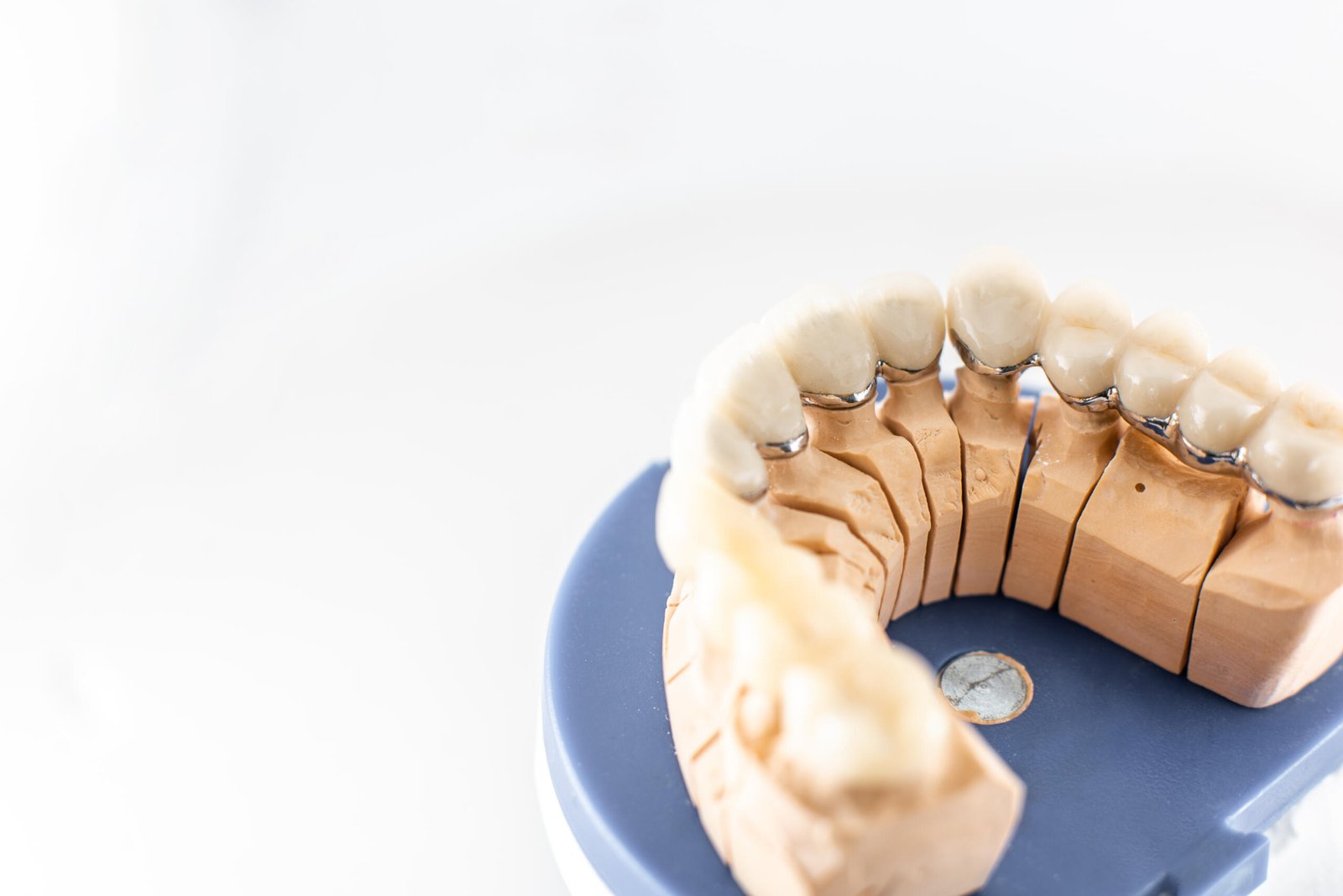
A dental bridge is a fixed prosthetic restoration that replaces one or more missing teeth. Unlike removable dentures, bridges are permanently attached, so they stay in place while eating and speaking.
Structure of a Dental Bridge:
- Pontics: Artificial replacement teeth (the “bridge”)
- Abutments: Adjacent natural teeth that support the bridge
- Crowns: Placed over abutment teeth to anchor the bridge
- Retainers: Connectors bonding the structure together
Why Missing Teeth Matter:
A single missing tooth causes problems you might not realize:
- Shifting teeth: Remaining teeth drift into the gap
- Bite changes: Altered chewing forces cause wear
- Bone loss: Without tooth root, jawbone deteriorates
- Speaking difficulty: Speech changes noticeably
- Chewing limitations: Can’t eat certain foods
- Appearance: Gap affects smile confidence
- Decay risk: Gaps trap food and bacteria
- Gum disease: Food accumulation promotes infection
Dental bridges solve these problems by restoring the gap and preventing complications from missing teeth.
Types of Dental Bridges: Choosing the Right Solution in Katy, TX
Different bridge types are appropriate for different situations. Your dentist recommends the best option based on your specific case:
TRADITIONAL BRIDGES (Most Common)
- What it is: Replacement teeth anchored by crowns on adjacent teeth
- Support: Natural teeth on both sides of gap
- Advantages: Highly stable, natural-looking, affordable
- Disadvantages: Requires shaping healthy adjacent teeth
- Longevity: 10-15+ years typical
- Best for: Single or multiple missing teeth with healthy adjacent teeth
- Cost: Mid-range
CANTILEVER BRIDGES (One-sided)
- What it is: Bridge anchored only on one side
- Support: Only one adjacent natural tooth
- Advantages: Preserves one healthy tooth
- Disadvantages: Can stress the supporting tooth; less stable
- Best for: Missing tooth at end of arch
- Longevity: 10+ years
- Cost: Similar to traditional
MARYLAND BRIDGES (Resin-Bonded)
- What it is: Replacement tooth bonded to backs of adjacent teeth
- Support: Minimal modification; tooth-colored wings bond to backs of teeth
- Advantages: Conservative; minimal tooth structure removed
- Disadvantages: Less stable; not ideal for heavy chewing
- Best for: Younger patients; single missing front teeth
- Longevity: 5-10 years (less durable)
- Cost: Most affordable
IMPLANT-SUPPORTED BRIDGES
- What it is: Replacement teeth supported by dental implants
- Support: Titanium implant posts in jawbone
- Advantages: Strongest option; doesn’t stress natural teeth; best for multiple teeth
- Disadvantages: Higher cost; requires implant surgery; longer treatment
- Best for: Multiple missing teeth; patients wanting maximum stability
- Longevity: 15-20+ years
- Cost: Higher cost but worth it for durability
Maison Dentists Recommendation:
Traditional bridges offer the best balance of affordability, function, and appearance for most patients in Katy, TX. Our doctors evaluate your situation and recommend the bridge type best suited to your specific needs.
The Dental Bridge Procedure: What to Expect in Katy, TX
Understanding the bridge procedure helps you prepare and know what to expect:
APPOINTMENT 1: Preparation
Step 1: Consultation and Assessment
- Examination of missing tooth gap
- Evaluation of adjacent teeth
- Digital imaging and impressions
- Discussion of bridge options
- Cost and timeline reviewed
Step 2: Tooth Preparation
- Adjacent teeth numbed with local anesthetic
- Teeth reduced to proper size for crowns
- Approximately 1-2mm reduced from all surfaces
- Decay or damage removed
Step 3: Impression
- Traditional: Putty material captures tooth shapes
- Digital: 3D scanner captures precise images
- Bite recorded to ensure proper alignment
- Shade selected to match surrounding teeth
Step 4: Temporary Bridge
- Temporary bridge placed protecting teeth
- Temporary bridge fragile; avoid sticky foods
- Protects teeth while permanent bridge fabricated
- Typically worn 1-2 weeks
BETWEEN APPOINTMENTS:
- Lab technician creates custom bridge
- Pontics (replacement teeth) shaped
- Color-matched to surrounding teeth
- Adjacent crowns crafted
- Quality assurance check performed
APPOINTMENT 2: Bridge Placement (Usually 1-2 weeks later)
Step 1: Temporary Removal
- Temporary bridge carefully removed
- Teeth gently cleaned
Step 2: Try-In and Adjustment
- Permanent bridge placed (not cemented yet)
- Appearance checked—matches surrounding teeth?
- Bite verified—does it feel correct?
- Margins examined—proper fit?
- Adjustments made if necessary
Step 3: Final Cementation
- Teeth surface prepared and cleaned
- Special dental cement applied
- Bridge pressed firmly into place
- Excess cement removed
- Final bite check in cemented position
Step 4: Post-Placement Care
- Avoid chewing on bridge for 24 hours
- Gentle flossing begins after 24 hours
- Normal function resumes after cement sets
Bridges vs. Implants vs. Dentures: Choosing Your Best Option in Katy
Three main options exist for replacing missing teeth. Each has advantages and disadvantages:
DENTAL BRIDGES:
- Cost: Moderate
- Longevity: 10-15+ years
- Natural appearance: Excellent
- Function: Excellent (like natural teeth)
- Tooth structure: Requires modifying adjacent teeth
- Bone preservation: Does not prevent bone loss
- Reversibility: Can be removed but teeth permanently modified
- Best for: One or more missing teeth with healthy adjacent teeth
DENTAL IMPLANTS:
- Cost: Higher upfront cost
- Longevity: 20+ years (can be lifetime)
- Natural appearance: Excellent
- Function: Excellent (like natural teeth)
- Tooth structure: No adjacent teeth affected
- Bone preservation: Prevents bone loss
- Treatment duration: 4-6 months (implant integration)
- Best for: Single or multiple teeth; long-term solution
DENTURES:
- Cost: Most affordable
- Longevity: 7-10 years average
- Natural appearance: Good but noticeably artificial to trained eye
- Function: Adequate but less stable than bridges/implants
- Tooth structure: No adjacent teeth affected
- Removable: Must remove for cleaning and sleeping
- Maintenance: Regular adjustments needed
- Best for: Multiple or all teeth; budget-conscious
Comparison Table:
| Factor | Bridges | Implants | Dentures |
|---|---|---|---|
| Cost | Moderate | Higher | Lowest |
| Longevity | 10-15+ years | 20+ years | 7-10 years |
| Appearance | Natural | Natural | Good |
| Function | Natural | Natural | Limited |
| Tooth effect | Modifies adjacent | None | None |
| Bone loss | Does occur | Prevented | Continues |
| Removable | No (fixed) | No (fixed) | Yes |
| Maintenance | Brush/floss | Brush/floss | Daily soaking |
| Adjustment period | Days/weeks | Weeks | Weeks |
Maison Dentists can discuss all three options and help you choose the best solution for your situation.
How to Care for Your Dental Bridge: Maintenance Tips in Katy
Proper bridge care extends its lifespan and prevents complications:
Daily Maintenance:
✓ Brushing: Brush bridge just like natural teeth ✓ Flossing: Special threader floss reaches under bridge ✓ Gentle cleaning: Don’t be too aggressive around margins ✓ Rinse: Rinse with mouthwash after meals
Foods to Avoid:
- Hard candies and nuts
- Sticky foods (taffy, gum)
- Ice chewing
- Very hot foods initially
- Using teeth as tools
What You Can Eat:
- Everything else! Your bridge works like natural teeth
- Normal chewing function returns within weeks
- No dietary restrictions long-term
Professional Maintenance:
✓ Dental exams: Every 6 months ✓ Professional cleanings: Annually recommended ✓ Early problem detection: Catch issues before major damage ✓ Bridge inspection: Check cement and structural integrity
Signs Your Bridge Needs Attention:
- Looseness or movement
- Persistent bad breath under bridge
- Decay symptoms in adjacent teeth
- Visible gaps between crown and tooth
- Cement deterioration
- Pain or sensitivity
Contact Maison Dentists immediately if you notice any of these.
American Dental Association
American College of Prosthodontists
Common Questions About Dental Bridges in Katy, TX
Will my bridge look fake or obvious?
No. Modern dental bridges at Maison Dentists are virtually indistinguishable from natural teeth:
- Color matching: Exact shade of surrounding teeth
- Shape: Natural tooth appearance and contours
- Material: Quality porcelain and ceramic mimic natural teeth
- Margins: Hidden at gum line
- Result: Blends seamlessly with your smile
Unless people know you have a bridge, they won’t notice.
Will I need to replace my bridge?
With excellent care, bridges typically last 10-15+ years:
Lifespan factors:
- Quality materials: Premium materials last longer
- Oral hygiene: Poor care shortens lifespan
- Adjacent tooth health: Decay in supporting teeth causes problems
- Grinding: Teeth grinding stresses bridges
- Cement durability: Cement failure requires bridge replacement
When replacement needed:
- Decay develops in supporting teeth
- Bridge breakage or cracking
- Cement failure causing looseness
- Significant bone loss underneath
- Cosmetic reasons (discoloration)
Many patients keep bridges 15-20+ years with proper care.
How do I clean under and around my bridge?
Yes, but it requires special technique:
Flossing technique:
- Use special floss threader to pass floss under bridge
- Floss on both sides of each tooth carefully
- Floss under bridge pontic (replacement tooth)
- Curved motion around all tooth surfaces
Why flossing matters:
- Decay develops in gaps if not cleaned
- Gum disease risk increases without flossing
- Food accumulation causes bad breath
- Proper cleaning extends bridge lifespan
Daily flossing is essential for bridge success.
Will I get used to my bridge?
Yes. Here’s the timeline:
- First 24 hours: Feels slightly different/foreign
- First week: Noticeable but adapting
- 2-4 weeks: Feeling natural; mouth adjusting
- 1-3 months: Completely natural sensation
- Long-term: You’ll forget it’s not your natural tooth
Bite adjustment ensures proper feel. If bite feels off after placement, call for adjustment.
Why would I choose a bridge over an implant if implants last longer?
Great question. Here’s the comparison:
Bridges are preferable when:
- You want faster results (weeks vs. months)
- You want lower upfront cost
- Adjacent teeth need crowns anyway
- You want to keep the process simple
- Multiple teeth missing (more cost-effective)
- You want proven, predictable outcome
Implants are preferable when:
- You want the absolute best long-term solution
- You don’t want adjacent teeth modified
- You’re concerned about bone loss
- You plan to keep solution 20+ years
- Only one tooth missing (bridge less ideal)
Dr. Abbasi discusses both options and helps you decide based on your situation, budget, and goals.
I have gum disease. Can I still get a bridge?
Not until gum disease is treated:
- Gum disease treatment first: Must address before bridge placement
- Reason: Bridge success depends on healthy supporting teeth
- Treatment timeline: 4-8 weeks of treatment usually needed
- Benefits: Treating gum disease prevents bridge failure
Process:
- Professional gum disease treatment (scaling, root planing)
- Home care and maintenance
- Re-evaluation after healing
- Bridge placement when gums healthy
Treating gum disease before bridge placement ensures long-term success.
What keeps the bridge from falling out?
Dental cement and crowned teeth:
Bridge retention system:
- Crowns: Cemented over adjacent teeth providing support
- Dental cement: Special permanent cement bonds crowns to teeth
- Tight fit: Bridge is custom-made for perfect fit
- Stability: Adjacent teeth support and anchor bridge
Permanent bond:
- Cement is strong and long-lasting
- Bridge won’t fall out during eating/speaking
- Bridge functions like natural teeth in terms of stability
- Bridge can only be removed by dentist if replacement needed
Your bridge is secure and stable—you can eat, speak, and smile with confidence.